SpeakUp AI - Language Learning
- 4.8
- Rating
- 500.00K
- Installs
- Free
- Price

 Analysis by App-foxy
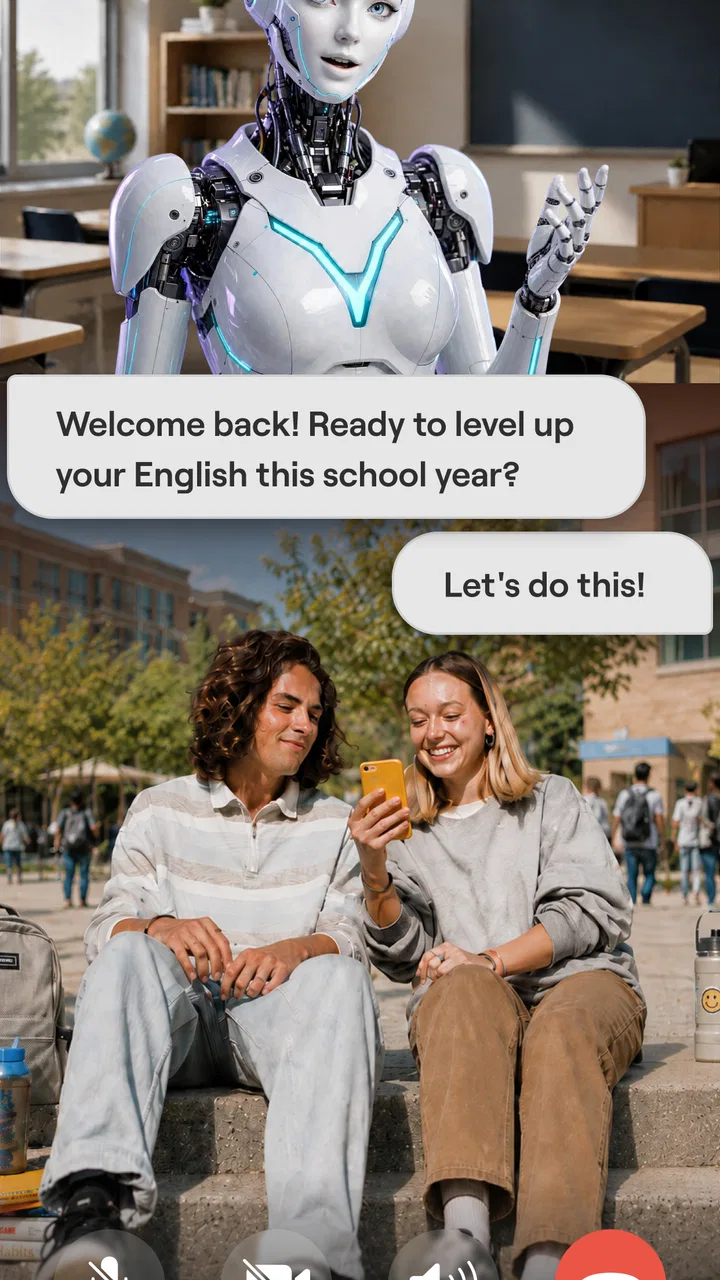
Learning to speak a language is very different from recognizing words in a lesson. I noticed that difference quickly with SpeakUp AI, an education app from Growly built around real-time English and Spanish conversation with feedback. Instead of treating speaking as something saved for an occasional voice exercise, it puts the user in a more direct practice loop: say something, receive a response, notice what needs work, and try again.
That approach makes it interesting for people who already know basic vocabulary but hesitate when they have to produce a sentence aloud. It is also a useful option for learners who want a low-pressure way to practice between classes. My overall impression is that its value depends less on how many lessons someone completes and more on whether they are willing to speak regularly. If you only want silent flashcards, this is probably the wrong kind of language app. If you want to build comfort through conversation, it deserves a closer look.
How the conversation-first approach feels in everyday use
The most important design choice here is the focus on speaking rather than passive study. A traditional course can be excellent for explaining grammar, organizing vocabulary, and giving you a clear path through a language. However, it may not prepare you for the awkward moment when you need to answer without translating every word in your head. SpeakUp AI aims at that moment directly.
You May Also Like

 Blood Strike: 2.5 Anniversary
Blood Strike’s Loadouts Turn Every Drop Into a Tactical Gamble
A close look at Blood Strike’s custom loadouts: how fast access to signature weapons reshapes its battle royale rhythm, rewards preparation, and narrows the gap between fights.

 Pandora - Music & Podcasts
Pandora’s Music Is Easy to Start, but Harder to Recover
Pandora’s strength is its low-effort path from a seed to a station. Its weak spot is how much confidence it asks you to place in connection, setup, and quiet recovery.

 8 Ball Pool
 Is Built on Rivalries, Rematches, and Routine
A close look at the rivalries, rematches, shared routines, and unanswered safety questions that turn a quick pool match into a persistent mobile community.

 Samsung Music
’s Quiet Strength Is Playing What You Already Own
Its reach comes less from spectacle than from dependable access to a personal library. That simplicity is both the app’s strongest retention engine and its ceiling.

 AccuWeather: Weather Radar
AccuWeather Review: A Quick, Clear Forecast for Everyday Decisions
For everyday plans, the best forecast is the one you can understand quickly. AccuWeather makes rain timing, radar, and local conditions easy to act on, with a few trade-offs.

 Hill Climb Racing
Why Hill Climb Racing Still Turns Crashes Into One More Run
A tiny car, a bumpy hill and one more upgrade: Hill Climb Racing keeps resurfacing because its simple chaos makes every near-miss feel personal.
More From Our News Desk
View All News


I find this especially useful for short practice sessions. You do not need to turn language learning into a large project every time you open the app. A few minutes of spoken interaction can fit before work, during a break, or after dinner. That makes the app easier to use as a habit rather than as a course that waits for a long, perfectly planned study block.
The feedback element is just as important as the conversation itself. Speaking without any correction can reinforce mistakes, while correction without a chance to respond can feel like a grammar worksheet. The combination gives the practice more purpose. I would still treat feedback as guidance rather than an absolute judgment, especially when a sentence could be expressed in several natural ways, but it gives learners something concrete to review after each attempt.
One practical workflow is to begin with a familiar situation, such as introducing yourself, ordering food, or describing your day. After that, repeat the same subject with a small change: use the past tense, explain a problem, or ask a follow-up question. This turns a short session into controlled practice. You are not merely trying to survive one exchange; you are testing whether you can reuse the language in a slightly different context.
Who benefits most from it
I would recommend it first to learners who understand more than they can comfortably say. That includes people who have studied English or Spanish through school, reading, or apps but still freeze during live conversation. The artificial setting can reduce the social pressure of speaking with a teacher or stranger, while still requiring you to form an answer aloud.
It can also suit travelers preparing for a specific trip. Rather than trying to memorize a huge phrase list, you can rehearse the situations most likely to matter: checking into accommodation, asking for clarification, explaining a dietary need, or handling a simple misunderstanding. The useful insight is to practice recovery phrases, not just ideal sentences. Being able to say “Could you repeat that?” or “I mean…” often matters more than producing a perfect first answer.
Busy adults may appreciate the flexible format as well. A conventional class gives structure and accountability, but it also demands a fixed schedule. SpeakUp AI is better suited to someone who needs practice that can be started and stopped around daily responsibilities. It is also approachable for a family member who wants to try language speaking without committing to a paid course, since the app is free and carries an Everyone age rating.
On the other hand, complete beginners who need a carefully sequenced explanation of pronunciation, sentence structure, and grammar may need another resource alongside it. Conversation practice can reveal a gap, but it does not automatically provide the full teaching framework needed to close every gap. I would use it as a speaking layer, not assume it replaces a complete curriculum.
Speed expectations during live practice
Real-time conversation creates a different expectation from a vocabulary app. When a learner taps an answer in a quiz, a delayed response is irritating. In a spoken exchange, timing affects the feeling of the conversation itself. SpeakUp AI is designed around that immediate back-and-forth, so its perceived speed matters more than it would in a static lesson.
In normal use, I would judge the experience by whether the pause feels short enough to preserve the thread of thought. A brief pause can actually be helpful because it gives a learner a moment to plan the next sentence. A long interruption, however, can make someone forget what they wanted to say or switch back to their native language. This is why I prefer using short, focused prompts at first rather than attempting a complicated story in one go.
There is a useful trade-off here. Instant conversation encourages spontaneity, but spontaneity leaves less time to inspect every grammar rule. If your goal is confident communication, that pressure is beneficial. If your goal is detailed written accuracy, you may find the spoken rhythm too fast and should follow it with slower note-taking or a separate grammar review.
For the best experience, I would avoid opening a session when the phone is already struggling with several demanding tasks. Real-time interaction is more sensitive to interruptions than a downloaded reading exercise. Closing unnecessary apps, using a stable connection, and speaking in a reasonably quiet place are simple steps that can make the exchange feel more consistent without changing the learning method.
What happens during heavier use
A short greeting practice is an easy test, but language learning becomes more demanding when you continue through several conversations, switch between English and Spanish, or repeatedly ask for feedback. Longer sessions place more importance on sustained responsiveness and on how easy it is to recover after an interruption.
I would not treat a single smooth exchange as proof that every long session will feel identical. The practical way to use the app is to divide heavier practice into small rounds. For example, spend one round on pronunciation, another on past-tense answers, and a final round on free conversation. This has two advantages: it reduces mental fatigue, and it gives you a clear point at which to pause if the device or connection becomes less responsive.
That structure also improves learning quality. Many people keep talking for too long and remember only that the session felt difficult. Short rounds let you identify whether the problem was vocabulary, sentence formation, listening, or simply tiredness. I find that distinction valuable because the right next step changes depending on the cause. A vocabulary gap calls for review; hesitation may call for repeating the same prompt; fatigue calls for stopping.
Resource demands are another reason to keep expectations realistic. A live AI conversation naturally asks more from a phone than a page of text or a simple flashcard deck. I would not call that a flaw specific to this app, but it does mean that older or entry-level devices may feel less comfortable during extended use than during short study sessions. The app supports Android devices starting with version 7.0, which makes it accessible to many users, although operating-system support alone does not guarantee identical performance on every handset.
Reliability and recovering from interruptions
Reliability in a speaking app is not just about whether it opens. It is about whether you can maintain a useful practice rhythm when something goes wrong. A dropped connection, an accidental interruption, or a misunderstood response can break confidence more quickly than it breaks a text lesson.
My advice is to treat recovery as part of the workflow rather than as a failure. If a response is misunderstood, rephrase it instead of repeating the exact same sentence louder or faster. If the exchange loses its place, restart with a short summary of what you meant. This is surprisingly valuable language practice because real conversations also require clarification and repair.
There is a second benefit to this approach: it prevents the learner from becoming dependent on perfect app behavior. No digital conversation partner can represent every real speaking situation. Practicing how to restart, clarify, and simplify makes the exercise more transferable to a conversation with another person.
For dependable sessions, I would use a stable connection and avoid treating the app as something that must work in every noisy or crowded environment. A quiet room is not only better for recognition; it also makes it easier for you to hear the response and evaluate the feedback. If you are practicing while walking or commuting, keep the session simple and accept that interruptions may be more likely.
Device limits and the right setup
The broad Android compatibility is a positive point for accessibility. SpeakUp AI is free, and its Everyone rating makes it easy to consider for a wide range of learners. Its current version is 1.2.5, so I would keep the app updated when possible, particularly if a device behaves inconsistently. Updates can matter more for a real-time tool than for an app that only displays stored content.
Still, compatibility should not be confused with an identical experience on every phone. Microphone quality, speaker clarity, background noise, available memory, and network conditions all affect spoken practice. A learner using a modest device may get better results from shorter sessions and a quiet room than from trying to imitate a long class.
I also recommend checking your physical setup. Hold the phone where you can hear the response without raising the volume excessively, and speak naturally instead of forcing an exaggerated accent. If you are using the app to work on pronunciation, consistency matters more than volume. Repeating the same sentence from a similar distance makes your own comparisons more useful.
Another overlooked constraint is attention. Because the app is conversational, it can feel productive even when you are answering automatically. I would keep a small note of recurring corrections or words that caused hesitation. The app can provide the immediate practice, but the learner still needs to notice patterns. Without that reflection, a session may be enjoyable without producing much long-term improvement.
How it compares with classes, tutors, and ordinary language apps
Compared with flashcard-focused tools, SpeakUp AI gives speaking a more central role. Flashcards remain better for memorizing a large set of words quickly, especially when you want deliberate repetition and visual recall. I would not abandon them if vocabulary is your main weakness. Instead, I would use them before a conversation session so that the words are available when you need to produce them aloud.
Compared with a structured language course, this app appears more flexible but less like a complete syllabus. A course can tell you what to study next and build concepts in a carefully ordered sequence. SpeakUp AI is more useful when you already have a topic or goal and want to turn knowledge into speech. That makes it a strong companion to formal learning, not necessarily a full replacement for it.
A human tutor still has advantages that an AI conversation cannot fully duplicate. A tutor can understand personal context, notice emotional hesitation, adapt explanations, and challenge you in a socially meaningful way. The app wins on convenience and low pressure. It lets you practice without arranging a lesson, but it cannot provide the same human relationship or cultural judgment.
For many learners, the best combination is simple: use a structured source for explanations, SpeakUp AI for frequent speaking, and occasional human conversation for reality testing. That division of labor avoids asking one app to do everything. It also makes the free price especially useful because the app can fill the practice gap without forcing you to replace other resources.
Three practical routines that make it more useful
First, use a “same idea, three versions” routine. Say a basic sentence, then make it negative, then turn it into a question. This exposes whether you truly understand the structure or only memorized one form. It is more revealing than constantly jumping to unrelated topics because the repeated vocabulary lets you focus on grammar and flexibility.
Second, practice deliberate imperfection. Choose a topic where you know only part of the vocabulary and try to explain around the missing word. Describe its function, appearance, or purpose instead of immediately translating it. This trains a real conversational skill: staying engaged when the exact word does not arrive. It is one of the strongest reasons to use a conversation-based app rather than only a word list.
Third, finish with a repair round. Intentionally ask for repetition, correct yourself, or restate an answer more clearly. Many learners practice polished sentences but never practice what to do after a mistake. The repair round turns feedback into an active skill and can reduce the panic that often appears in live conversation.
For English learners, I would use one session to work on concise answers and another to expand them with reasons or examples. For Spanish learners, the same method can help with gender, verb endings, and switching between familiar present-tense phrases and past events. I would not try to target every issue at once. Pick one feature, listen for it, and let the rest of the conversation remain natural.
Where the app may disappoint
The conversation format is not automatically motivating for everyone. Some learners prefer visible progress bars, carefully staged units, or a clear lesson endpoint. If your main satisfaction comes from completing organized exercises, an open-ended speaking tool may feel less rewarding even when it is educationally useful.
There is also a risk of practicing the same comfortable topics repeatedly. The app can make speaking less intimidating, but the learner still has to increase difficulty. Without a plan, it is easy to discuss introductions and daily routines while avoiding explanations, opinions, or unexpected questions. I would raise the challenge gradually rather than waiting for the app to transform a familiar routine into advanced conversation by itself.
People preparing for high-stakes exams should be cautious about relying on it alone. Conversation feedback may support fluency and confidence, but exam preparation often requires specific formats, timed writing, reading strategies, and detailed marking criteria. Likewise, learners who need specialist vocabulary for medicine, law, or technical work should add material designed for that field.
Finally, anyone who dislikes speaking to a device may not enjoy the central interaction. That is not a minor side feature that can be ignored; it is the reason to choose this app. If you would rather read explanations or tap multiple-choice answers, another education app will probably feel more natural and may help you study more consistently.
Reach, maturity, and overall value
The app has reached over half a million installs and holds an average rating of 4.8 from around two thousand ratings. Those figures suggest that the concept is resonating with a meaningful group of learners, while the relatively small number of written reviews means the rating should be viewed as a useful signal rather than a complete picture of every experience.
Its developer, Growly, has kept the proposition easy to understand: use AI conversation to speak English or Spanish and receive feedback. I like that the purpose is focused. The app does not need to replace every language-learning method to be worthwhile; it only needs to make regular speaking practice easier to start.
The free price lowers the barrier to testing that method for yourself. I would spend a week using short, planned sessions rather than judging it after one conversation. Track whether you hesitate less, recover more easily, and reuse new structures without prompting. Those are better signs of progress than simply counting how long the app stayed open.
My final view is positive, with a clear boundary. SpeakUp AI is a practical speaking companion for English and Spanish learners who need more active practice, particularly those who feel stuck between understanding and responding. It should run best when you give it a stable connection, a quiet environment, and focused sessions rather than treating it like an unlimited background activity.
I would recommend it as a low-pressure conversation layer, not as the only language resource. Pair it with structured explanations when you need grammar, flashcards when vocabulary is the bottleneck, and human conversation when you need cultural nuance or serious evaluation. Used that way, the app’s real strength becomes clear: it helps turn knowledge you already possess into language you can actually say.
FAQs for SpeakUp AI - Language Learning
01What is SpeakUp AI - Language Learning, and how does it work?
SpeakUp AI - Language Learning is designed to help users practice languages through AI-supported conversations and interactive exercises. After choosing a target language, you can typically work on speaking, vocabulary, pronunciation, and everyday phrases. The app’s conversational format makes practice feel more natural than simply reviewing word lists, although the quality and usefulness of feedback may depend on your device, selected language, and available app features.
02Which languages can I learn with SpeakUp AI?
The available language list may vary depending on the app version, region, and subscription plan, so it is worth checking the current description in Google Play or the App Store before downloading. SpeakUp AI generally focuses on practical language learning rather than academic study alone. Beginners should confirm that their preferred language and learning level are supported, especially if they need a less commonly taught language or advanced grammar content.
03Is SpeakUp AI suitable for complete beginners?
SpeakUp AI can be useful for beginners because AI conversations and guided practice may help users learn common expressions without requiring previous fluency. However, new learners may still need introductory lessons covering pronunciation, basic grammar, and essential vocabulary before they can comfortably use conversation features. The app works best as a regular practice companion, not necessarily as a complete replacement for a structured course or teacher.
04Does SpeakUp AI require a subscription or include in-app purchases?
The app may offer free access to some lessons or features while reserving extended conversations, advanced feedback, personalized learning tools, or additional content for a paid plan. Subscription prices, trial periods, renewal terms, and available features can change, so review the purchase screen carefully before confirming payment. If you start a free trial, check the cancellation rules through your Google Play or Apple account settings.
05Can SpeakUp AI replace a language teacher or traditional learning course?
SpeakUp AI is best viewed as a convenient supplement rather than a complete replacement for a qualified teacher or comprehensive course. It can provide flexible speaking practice, repetition, and immediate interaction, which are valuable for building confidence. Nevertheless, AI feedback may occasionally miss context, misunderstand pronunciation, or provide explanations that need verification. Combining the app with reading, listening, writing, and real conversations usually produces better long-term results.
Pros
- AI conversations provide useful speaking practice anytime.
- Personalized feedback helps identify pronunciation and grammar issues.
- Supports flexible
- self-paced learning without fixed class schedules.
- Short practice sessions fit easily into busy daily routines.
- Progress tracking can help maintain motivation over time.
Cons
- Some advanced lessons or feedback features may require a subscription.
- AI responses can occasionally feel repetitive or lack natural context.
- Pronunciation evaluations may be less reliable for strong accents.
- A stable internet connection may be needed for most AI features.
- It may not fully replace structured lessons with a human teacher.

SpeakUp AI - Language Learning
Gallery